


From laws to new satellites: Armenia aims to develop its space industry, with partnership with France on the agenda
10.09.2026,
12:23
Armenia is interested in a more substantive partnership with France in the space sector, Armenian Prime Minister Nikol Pashinyan stated on Wednesday during a meeting with French President Emmanuel Macron at the Elysee Palace.
YEREVAN, September 10. /ARКА/. Armenia is interested in a more substantive partnership with France in the space sector, Armenian Prime Minister Nikol Pashinyan stated on Wednesday during a meeting with French President Emmanuel Macron at the Elysee Palace.
The head of the Armenian government is in Paris to participate in the first International Space Summit.
Pashinyan thanked Macron for the invitation and warm welcome, emphasizing the importance of deepening cooperation between the two countries in space. "Armenia is interested in a more substantive partnership in this area," the prime minister noted.
Macron, in turn, thanked Pashinyan for accepting the invitation to participate in the first International Space Summit. The French President emphasized the importance of consistently developing bilateral relations in all areas in accordance with the Armenian-French declaration on strategic cooperation.
ARKA-Telecom presents five key facts about the development of Armenia's space industry—from legislative initiatives and the first satellites to new projects and international cooperation.
Armenia's Space Industry: Legislative Framework
The formation of a national legislative framework for the development of the space industry in Armenia began in 2020. On March 6, the National Assembly adopted the Law "On Space Activities" and a package of accompanying amendments, which, among other things, introduced licensing for activities in this area.
Tax incentives are provided for certain types of space activities until December 31, 2030. The annual state duty for space activities is set at 10,000 times the base duty—10 million drams (approximately $27,500 at the current exchange rate as of September 9, 2026).
Armsat-1 – Armenia's First Satellite
Armenia's first satellite, Armsat-1, was launched into low-Earth orbit on May 25, 2022, as part of a collaboration between the state-owned Geocosmos CJSC and the Spanish company Satlantis.
The Earth remote sensing satellite was designed to obtain data that could be used in a variety of fields, from environmental monitoring, emergency situations, and climate change to urban planning and road construction.
At the same time, Armenia began developing its own ground infrastructure and training specialists to operate the satellites and process the acquired data.
In November 2025, Armsat-1 began its planned deorbit, marking the completion of the project. The data and experience gained during the mission are being used in the design of next-generation Earth remote sensing and communications satellites.
Hayasat-1 – a domestically developed satellite
Hayasat-1, the first satellite developed in Armenia, marked another milestone in the industry's development. It was created by the Bazoomq Space Research Laboratory and the Center for Education Development and Scientific Innovation.
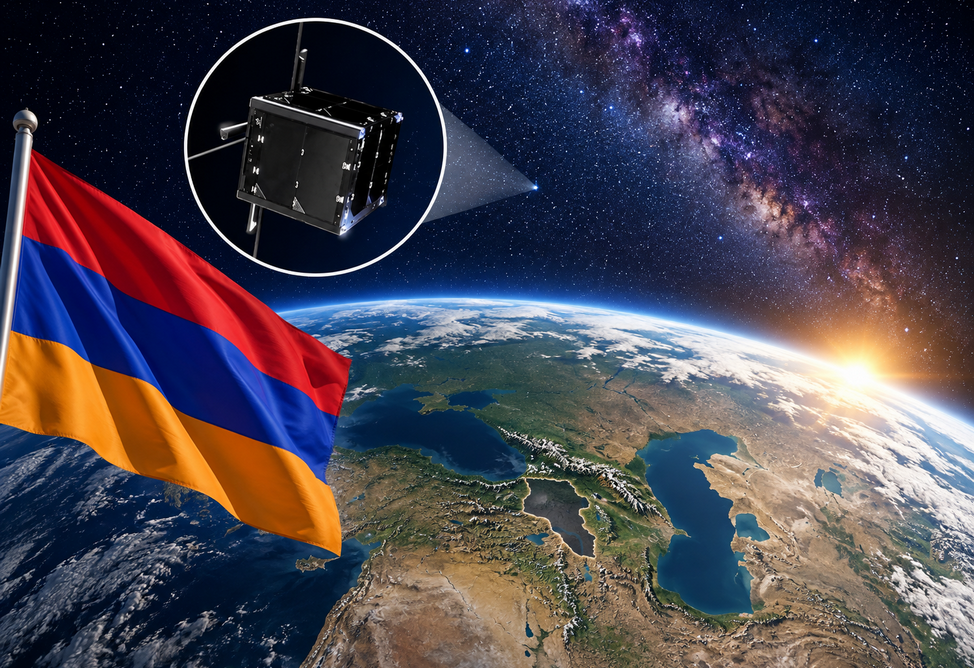
The CubeSat, measuring 10 x 10 x 10 cm and weighing approximately 1 kg, was launched on December 1, 2023, on a SpaceX Falcon 9 rocket from Vandenberg Air Force Base in California.
The Hayasat-1 mission concluded in April 2025. The developers also viewed the project as an opportunity to develop practical space engineering competencies in Armenia.
New Satellites and Indigenous Competencies
Armenia intends to continue developing its satellite program with an emphasis on developing its own technological and human resources capabilities.
The country's authorities previously announced plans to continue satellite projects and gradually develop the capabilities of Armenian specialists in spacecraft control and data processing.
In February 2026, then-Minister of High-Tech Industry of Armenia Mkhitar Hayrapetyan stated that the country was seriously considering acquiring a new satellite or several satellites for remote Earth observation and space photography.
Satellite data can be used for a wide range of government and economic purposes, including agriculture, environmental monitoring, urban development, emergency management, and infrastructure control.
Armenia's International Cooperation in Space
Armenia's space initiatives are being developed with the participation of foreign partners. The Spanish company Satlantis participated in the Armsat-1 project, and Hayasat-1 was launched into orbit by SpaceX.
In 2022, Armenia also ratified the CIS agreement on joint activities in the exploration and use of outer space for peaceful purposes.
Against this backdrop, the meeting between Pashinyan and Macron highlighted France as another potential avenue for Armenia's international cooperation in space. However, specific joint Armenian-French space projects have not yet been announced following the meeting.
The head of the Armenian government is in Paris to participate in the first International Space Summit.
Pashinyan thanked Macron for the invitation and warm welcome, emphasizing the importance of deepening cooperation between the two countries in space. "Armenia is interested in a more substantive partnership in this area," the prime minister noted.
Macron, in turn, thanked Pashinyan for accepting the invitation to participate in the first International Space Summit. The French President emphasized the importance of consistently developing bilateral relations in all areas in accordance with the Armenian-French declaration on strategic cooperation.
ARKA-Telecom presents five key facts about the development of Armenia's space industry—from legislative initiatives and the first satellites to new projects and international cooperation.
Armenia's Space Industry: Legislative Framework
The formation of a national legislative framework for the development of the space industry in Armenia began in 2020. On March 6, the National Assembly adopted the Law "On Space Activities" and a package of accompanying amendments, which, among other things, introduced licensing for activities in this area.
Tax incentives are provided for certain types of space activities until December 31, 2030. The annual state duty for space activities is set at 10,000 times the base duty—10 million drams (approximately $27,500 at the current exchange rate as of September 9, 2026).
Armsat-1 – Armenia's First Satellite
Armenia's first satellite, Armsat-1, was launched into low-Earth orbit on May 25, 2022, as part of a collaboration between the state-owned Geocosmos CJSC and the Spanish company Satlantis.
The Earth remote sensing satellite was designed to obtain data that could be used in a variety of fields, from environmental monitoring, emergency situations, and climate change to urban planning and road construction.
At the same time, Armenia began developing its own ground infrastructure and training specialists to operate the satellites and process the acquired data.
In November 2025, Armsat-1 began its planned deorbit, marking the completion of the project. The data and experience gained during the mission are being used in the design of next-generation Earth remote sensing and communications satellites.
Hayasat-1 – a domestically developed satellite
Hayasat-1, the first satellite developed in Armenia, marked another milestone in the industry's development. It was created by the Bazoomq Space Research Laboratory and the Center for Education Development and Scientific Innovation.
The CubeSat, measuring 10 x 10 x 10 cm and weighing approximately 1 kg, was launched on December 1, 2023, on a SpaceX Falcon 9 rocket from Vandenberg Air Force Base in California.
The Hayasat-1 mission concluded in April 2025. The developers also viewed the project as an opportunity to develop practical space engineering competencies in Armenia.
New Satellites and Indigenous Competencies
Armenia intends to continue developing its satellite program with an emphasis on developing its own technological and human resources capabilities.
The country's authorities previously announced plans to continue satellite projects and gradually develop the capabilities of Armenian specialists in spacecraft control and data processing.
In February 2026, then-Minister of High-Tech Industry of Armenia Mkhitar Hayrapetyan stated that the country was seriously considering acquiring a new satellite or several satellites for remote Earth observation and space photography.
Satellite data can be used for a wide range of government and economic purposes, including agriculture, environmental monitoring, urban development, emergency management, and infrastructure control.
Armenia's International Cooperation in Space
Armenia's space initiatives are being developed with the participation of foreign partners. The Spanish company Satlantis participated in the Armsat-1 project, and Hayasat-1 was launched into orbit by SpaceX.
In 2022, Armenia also ratified the CIS agreement on joint activities in the exploration and use of outer space for peaceful purposes.
Against this backdrop, the meeting between Pashinyan and Macron highlighted France as another potential avenue for Armenia's international cooperation in space. However, specific joint Armenian-French space projects have not yet been announced following the meeting.