


Firebird Build AI Hackathon with $105,000 Prize Pool Held in Yerevan
28.09.2026,
18:58
The Firebird Build hackathon took place in Yerevan, bringing together engineers and researchers to develop solution prototypes using artificial intelligence tools.
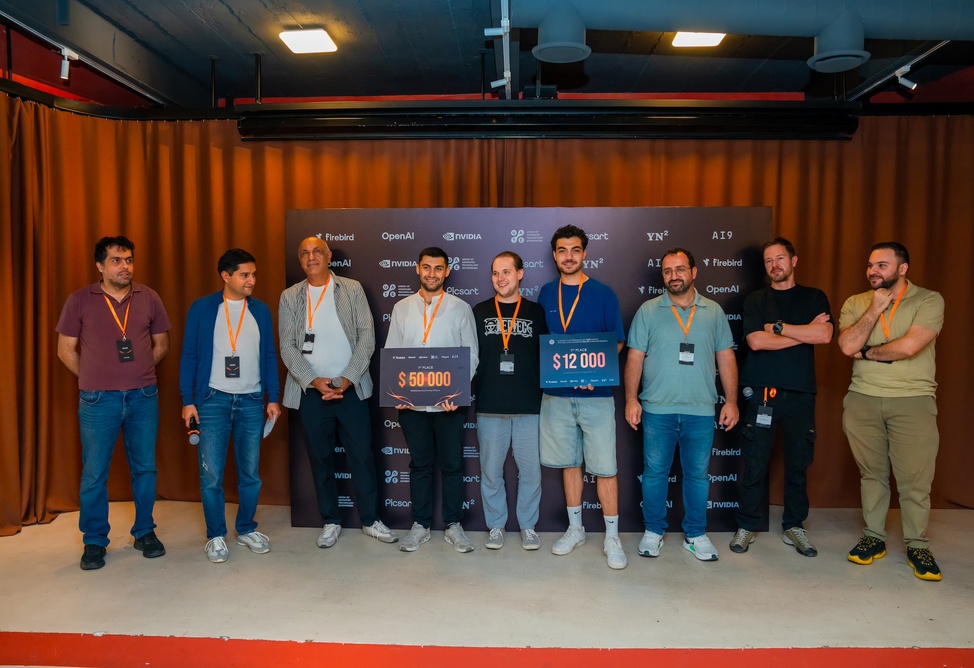
YEREVAN, September 28. /ARKA/. The Firebird Build hackathon took place in Yerevan, bringing together engineers and researchers to develop solution prototypes using artificial intelligence tools.
The event was held on September 26–27 at the AI9 Startup Campus. It was organized by Firebird with the participation of OpenAI, NVIDIA, Picsart, the Union of Advanced Technology Enterprises (UATE) of Armenia, AI9, and YerevaNN.
Over the course of 24 hours, participants worked on creating product prototypes using OpenAI Codex, supported by mentors from the tech community.
The solutions presented focused on the application of artificial intelligence in robotics, healthcare, environmental technology, cybersecurity, and other fields.
According to the organizers, the hackathon received over 500 applications. A team from Georgia also participated in the event.
"It is truly inspiring to see such a response from the community. More than 500 applications demonstrate that such opportunities are in high demand within the tech sector," said Edita Ghazaryan, Executive Director of UATE.
According to Firebird co-founder Alexander Yesayan, the initiative aims to expand access to artificial intelligence tools and computing resources for specialists and teams.
"Firebird Build is a step toward creating conditions that allow ideas to be transformed into working products," he noted.
The hackathon’s total prize pool was $105,000, comprising $80,000 in cash prizes and $25,000 in OpenAI API credits to support the development of the winning projects. First place went to the PhotonicsAI team, which developed an AI-integrated hardware control environment. The team received a $50,000 cash prize and $12,000 in OpenAI API credits.
Second place went to the "Why isn’t there an Ollama for VLAs?" team, which presented an infrastructure for training AI models for robots (VLAs). The prize consisted of $20,000 and $8,000 in OpenAI API credits.
Third place went to the EXPM team, which developed an autonomous, AI-agent-based security platform for identifying vulnerabilities and testing remediation solutions. The team received $10,000 and $5,000 in OpenAI API credits.
The event was held on September 26–27 at the AI9 Startup Campus. It was organized by Firebird with the participation of OpenAI, NVIDIA, Picsart, the Union of Advanced Technology Enterprises (UATE) of Armenia, AI9, and YerevaNN.
Over the course of 24 hours, participants worked on creating product prototypes using OpenAI Codex, supported by mentors from the tech community.
The solutions presented focused on the application of artificial intelligence in robotics, healthcare, environmental technology, cybersecurity, and other fields.
According to the organizers, the hackathon received over 500 applications. A team from Georgia also participated in the event.
"It is truly inspiring to see such a response from the community. More than 500 applications demonstrate that such opportunities are in high demand within the tech sector," said Edita Ghazaryan, Executive Director of UATE.
According to Firebird co-founder Alexander Yesayan, the initiative aims to expand access to artificial intelligence tools and computing resources for specialists and teams.
"Firebird Build is a step toward creating conditions that allow ideas to be transformed into working products," he noted.
The hackathon’s total prize pool was $105,000, comprising $80,000 in cash prizes and $25,000 in OpenAI API credits to support the development of the winning projects. First place went to the PhotonicsAI team, which developed an AI-integrated hardware control environment. The team received a $50,000 cash prize and $12,000 in OpenAI API credits.
Second place went to the "Why isn’t there an Ollama for VLAs?" team, which presented an infrastructure for training AI models for robots (VLAs). The prize consisted of $20,000 and $8,000 in OpenAI API credits.
Third place went to the EXPM team, which developed an autonomous, AI-agent-based security platform for identifying vulnerabilities and testing remediation solutions. The team received $10,000 and $5,000 in OpenAI API credits.