


Armenia is moving toward building AI infrastructure with investments in tens of millions of dollars: Eleveight AI co-founder
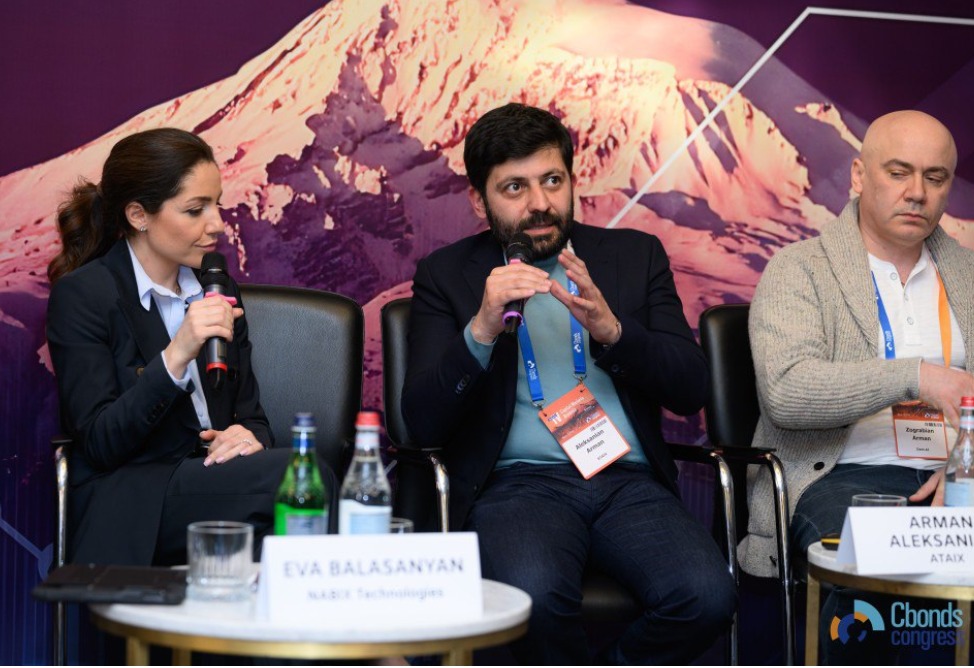
YEREVAN, March 20. /ARKA/. Armenia is beginning to transition from discussions of digital transformation to the practical implementation of AI projects, including the creation of specialized data centers and cloud infrastructure. Projects with investments in the tens of millions of dollars are already being launched in the country, forming the foundation for a new technological ecosystem.
In an interview with ARKA news agency, Arman Aleksanyan, co-founder and CEO of Eleveight AI, discussed the prospects for applying artificial intelligence in the capital market, Armenia's role in the development of regional AI services, and approaches to regulating crypto assets.
ARKA – Speaking about the Armenian capital market, for which tasks can AI infrastructure already provide practical benefits: risk management, customer analytics, compliance, cybersecurity?
A. Aleksanyan – AI will be implemented in one way or another in virtually all processes. The question is rather where to start – this depends on the specific tasks and current priorities of financial institutions.
Generally speaking, several key areas can be identified: analytics, process automation, and risk management. In each of these, AI can significantly improve efficiency and, in some cases, create new opportunities.
ARKA – To what extent can Armenia become not only a consumer but also a regional platform for AI services in the financial sector?
A. Aleksanyan – It's difficult to give definitive assessments, as the situation can change rapidly: projects that will significantly impact the market are perhaps already being implemented.
There are basic components: energy, computing power, infrastructure, and software. In this context, Armenia has certain advantages.
Political factors are also important to consider. A number of high-performance solutions, including Nvidia equipment, are subject to export restrictions in the United States, depending on the country of origin. In this regard, Armenia has the potential to access such technologies.
More broadly, the country has significant potential not only for implementing specialized projects but also for developing comprehensive infrastructure solutions for the entire region.
ARKA – How do you assess the prospects for digital bonds and funds for small markets: is this already a practical tool or is it still just a testing ground?
A. Aleksanyan – Rather, it's an additional tool that could be implemented with appropriate, favorable regulations, but significant changes are not expected.
Regarding regulated tokenization, it changes little from an investor's perspective. Today, you can open a bank account and purchase bonds through an app. With tokenization, the form changes – you acquire a digital asset that essentially represents the same bond.
Certain simplifications for issuers are possible, but this raises the question of balancing procedural simplification with risk management. With stricter regulation, issuing digital instruments could prove comparable in complexity to issuing traditional bonds.
ARKA – What needs to happen in Armenia in the next 1-2 years to be able to talk about the formation of a modern digital financial ecosystem?
A. Aleksanyan – This process has already begun. Our project, Eleveight AI, is already in the launch phase, and we are already discussing the possibility of implementing various products with banks and fintech companies. Such a high-tech base will become a catalyst for the development of financial technologies, among other things. Another key aspect is development-oriented regulation, which I believe will be implemented in a timely manner, as this area is one of the country's top priorities.
ARKA – Tell us more about the project.
A. Aleksanyan – This is a public cloud focused on artificial intelligence tasks based on the latest generation of Nvidia GPUs.
Technically, the project is complete: it is located in Gagarin, near Sevan. The equipment is already in Armenia, and assembly and testing are currently underway. The opening is expected soon.
ARKA – What is the investment volume?
A. Aleksanyan – The project will expand in stages, with the first phase amounting to approximately $70 million.
ARKA – How do you assess the Law on Cryptoassets and its practical implementation?
A. Aleksanyan – The regulation can be characterized as quite conservative, and some market participants believe this could hinder the industry's development.
If the goal is to stimulate growth and innovation, it is important to define targets: increasing the number of projects or focusing on individual major initiatives. An appropriate regulatory model should be developed to meet these goals.
Currently, in my opinion, various market participants – banks, the regulator, and the startup community – do not have a common understanding of the target model.
As a result, an adapted version of foreign approaches is used, aimed at risk mitigation, but it does not always stimulate the emergence of new projects.
ARKA – Do you have any recommendations on this issue?
A. Aleksanyan – First of all, it's necessary to define the industry's development goals. This is a task for both market participants and the regulator.
For example, we have a project in Kazakhstan, where regulation has been in place for several years. When entering a new market, it's important to understand what niche the company wants to occupy, what barriers exist, and how they can be overcome in collaboration with the regulator.
To a certain extent, this is a "chicken and egg" situation: a lack of projects hinders regulatory development, while inadequate regulation encourages the emergence of new projects. Effective solutions are formed through interaction between the market and the regulator.